Learn how others manage their Psoriasis.
Get tips for diet, exercise, and managing stress
Scalp Psoriasis: Why Liquid Shampoos Fail and Why You Need Dermabon Soap
By Ana Cristina Vazquez Martinez
Feb/03/2026
Reading time: 7 minutes
Psoriasis scalp treatment
If you are reading this, I know exactly what your morning routine looks like. You wake up, look in the mirror, and check your shoulders before you even check your phone. You’ve probably pushed your favorite black shirts to the back of the closet, opting for light grays or whites to hide the evidence.
The “snow” on your shoulders isn’t just dandruff; it’s the physical manifestation of a condition that is as emotionally exhausting as it is physically uncomfortable. As a Trichologist and Dermatologist, I hear the same frustration from my patients every day: “Doctor, I’ve bought every psoriasis shampoo at the pharmacy, but the itching won’t stop and the scalp scabs keep coming back.”
I’m here to tell you that the problem isn’t necessarily you, and it might not even be the active ingredient you are using. The problem is the vehicle. Today, we are going to break down why traditional liquid shampoos often fail to deliver results and why a solid bar format—specifically Dermabon Soap—is the game-changer your scalp has been waiting for.
The Common Mistake: Washing Hair Instead of Treating Skin
To understand why your psoriasis scalp treatment isn’t working, we first need to make a crucial distinction between your hair and your scalp.
Your hair is a non-living fiber made of keratin. Your scalp, however, is living, breathing skin—complex tissue with its own microbiome, pH balance, and cell turnover rate. When you have psoriasis or are seeking a seborrheic dermatitis treatment, the issue lies in the skin, not the hair strands.
The vast majority of commercial liquid shampoos are designed primarily as detergents. Their main job is to clean the hair shaft, removing oil, dirt, and styling products. They are formulated to foam up quickly, cover the hair surface, and rinse away easily.
Here lies the conflict: You are trying to treat a chronic skin condition with a product designed to wash hair.
When you use a liquid psoriasis shampoo, the product is mostly water (often up to 80%). You pour it into your hands, lather it up, and scrub. Because of its liquid nature, it immediately begins to drip down your forehead or neck, or it gets lost in the mass of your hair. Very little of the actual medication makes sustained contact with the plaque on your scalp. Effectively, you are washing your hair, but you are barely medicating your skin.
The Science of “Contact Time”: Why You Need 3 to 5 Minutes
Let’s talk about the biology of a psoriasis plaque. These scalp scabs or plaques are layers of skin cells that have multiplied too quickly. They form a thick, often silvery barrier.
For any active ingredient—specifically coal tar—to work, it must penetrate that thick barrier to reach the basal layer of the epidermis where the rapid cell division is happening. This process is not instantaneous. It requires what we in dermatology call “Contact Time.”
Think of it this way: If you have a dirty pan with burnt-on food (the plaque), simply splashing soapy water on it (liquid shampoo) and rinsing it off 30 seconds later won’t clean it. You need to let the soap soak.
The same applies to scalp psoriasis treatment. The active ingredient needs a minimum of 3 to 5 minutes of direct, undisturbed contact with the lesion to soften the scale and penetrate the skin.
The flaw with liquid shampoos is gravity. Because they are diluted and runny, they slide off the scalp before that 5-minute window is up. If you rinse the medication down the drain in under a minute, you aren’t treating the psoriasis; you’re just cleaning the flakes off the surface for a few hours.
Dermabon Soap vs. Liquid Shampoo: Higher Concentration, Better Adhesion
This is where the engineering of the treatment becomes just as important as the medicine itself. In my clinical practice, I often recommend moving away from water-heavy formulas toward concentrated solids.
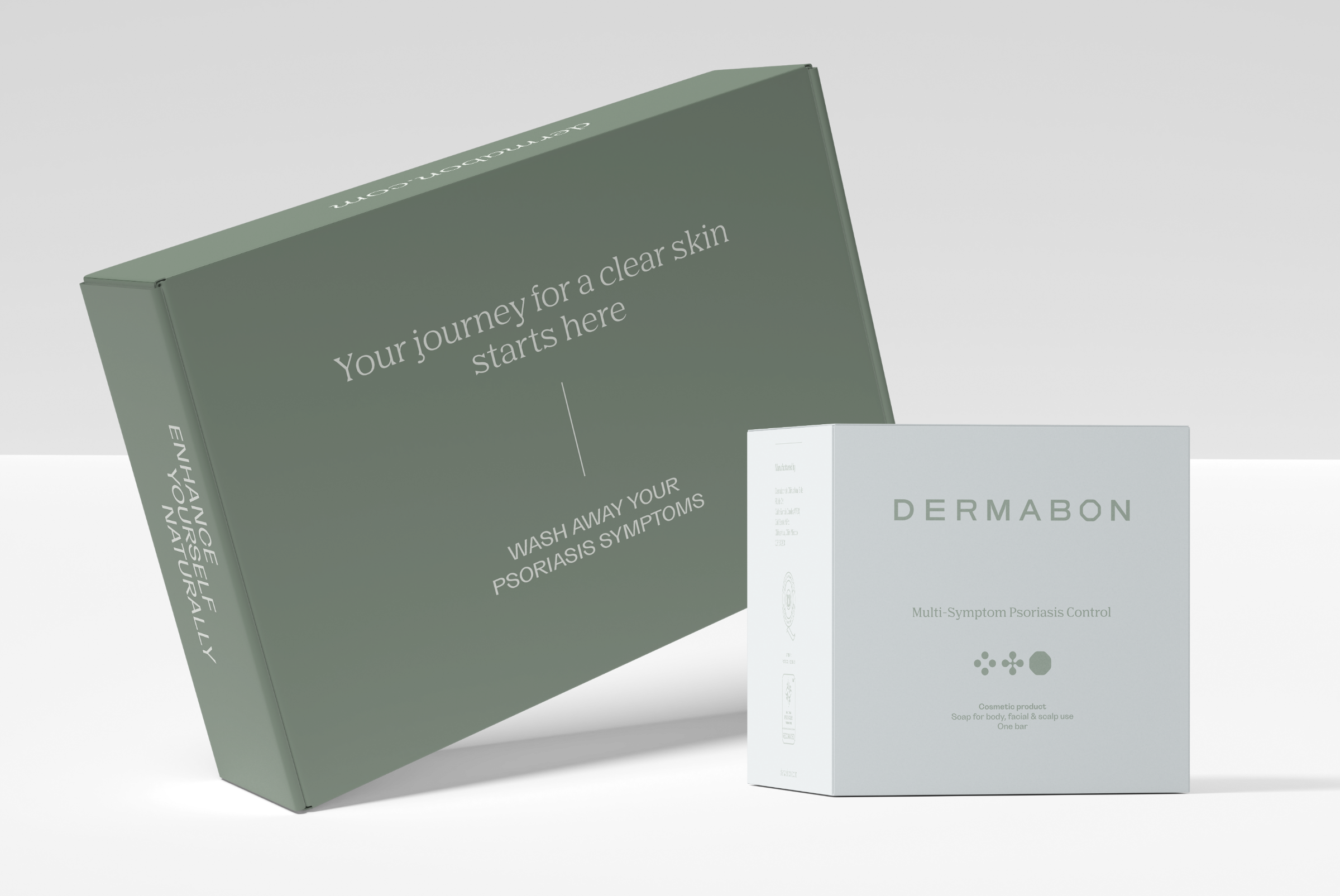
Dermabon Soap is different because it is an anhydrous vehicle (no added water). It is not a bottle of water with a bit of medicine; it is a concentrated block of active ingredients. When you apply Dermabon Soap, you create a creamy, dense emulsion that sits on the skin rather than running off it.
Why Dermabon Soap wins for scalp treatment:
-
Targeted Application: You can apply the soap bar directly to the plaque. It stays where you put it.
-
Higher Concentration: Without the need for fillers and water to fill a bottle, the concentration of coal tar is optimized for scalp health.
-
The “Mask” Effect: Because the lather generated by the soap is denser, it acts more like a treatment mask. It hugs the scalp, allowing for that critical 3 to 5-minute absorption period without dripping uncomfortably.
For effective treatment, we need the medicine to stay put. The solid bar format respects the physics of treatment: adhesion leads to absorption, and absorption leads to healing.
How to Apply Dermabon Soap Without Tangling Hair: Step-by-Step
A common fear my patients have about switching from a bottle to a bar of soap for their head is the mechanics of it. “Won’t rubbing a bar of soap on my head tangle my long hair?” It’s a valid concern, but with the right technique, it’s not an issue.
To get the most out of your Dermabon Soap without creating a bird’s nest in your hair, follow this protocol:
-
Step 1: Thorough Saturation. Wet your hair completely. Warm water helps to soften the thick scalp scabs and opens the hair cuticle slightly.
-
Step 2: Section the Hair. Do not rub the bar randomly over your head. Use your fingers to part your hair, exposing the scalp where the plaques are most severe.
-
Step 3: Direct Scalp Application. Take the Dermabon Soap and apply it directly to the exposed partings. Glide it along the skin. You are aiming for the roots, not the lengths of the hair.
-
Step 4: Massage and Lather. Put the bar down. Use the pads of your fingers (never your nails, as scratching triggers more inflammation) to massage the product into a lather right at the scalp level.
-
Step 5: The “Pose” (Crucial Step). Leave the lather on for 3 to 5 minutes. This is non-negotiable for effective treatment. Use this time to wash your body or shave. Let the coal tar do its work.
-
Step 6: Rinse. Rinse thoroughly with cool or lukewarm water. Hot water can trigger itching.
If you are ready to stop the cycle of itching and flaking, I recommend you buy Dermabon Soap and experience the difference a solid formula makes.
Post-Wash Hydration: Avoiding the Straw Effect
Coal tar is a powerful keratolytic (it breaks down excess skin), but when using a soap instead of a cosmetic shampoo, the hair fiber might feel different to the touch. A successful routine must balance medical efficacy with cosmetic manageability.
If you feel your hair is less soft than when using a commercial shampoo full of silicones, this is easily managed:
-
Condition the Lengths, Not the Scalp: After rinsing out the Dermabon Soap, apply a high-quality moisturizing conditioner. However, apply it only from mid-lengths to ends. Avoid rubbing conditioner into the scalp, as this can block the pores we just cleared or interact with the medication.
-
Avoid Heat Styling: While your scalp is healing, try to minimize the use of blow dryers and straighteners, which dry out the scalp and can aggravate seborrheic dermatitis.
Conclusion
Managing psoriasis is a journey, but it doesn’t have to be a lonely or hopeless one. Understanding that scalp treatment requires time, contact, and the right vehicle is the first step toward clearing your skin and reclaiming your confidence.
Liquid shampoos often offer a false sense of security—they clean, but they don’t stay long enough to cure. By switching to Dermabon Soap, you are ensuring that the active ingredients have the time and concentration needed to penetrate those stubborn plaques.
You don’t have to hide under hats or avoid dark clothing forever. With the right method and the right soap, relief is possible.