Learn how others manage their Psoriasis.
Get tips for diet, exercise, and managing stress
The “Rebound Effect” of Cortisone Creams: What It Is and How to Avoid It
By Ana Cristina Vazquez Martinez
Feb/12/2026
Reading time: 7 minutes
As a Pharmacist, I have seen this scene hundreds of times at the counter: a patient arrives looking for their usual cortisone cream. In the beginning, a tube lasted them six months. Then, one month. Now, they come every week because “if I don’t apply it, my skin burns and turns red instantly.”
What this patient doesn’t know is that they have fallen into a pharmacological trap.
Topical corticosteroids are powerful and useful medications for acute crises, but they were not designed to be a daily, long-term skincare cream. When abused—or used without a proper exit strategy—they trigger a biological phenomenon known as the topical steroid rebound effect.
Today, wearing my chemist’s hat, I want to explain exactly what is happening to your skin’s biochemistry, why your body is becoming “immune” to the medication, and how you can get out of this vicious cycle safely.
Why Did My Cream Stop Working? Understanding Skin Tolerance
To understand the topical steroid rebound effect, we must first understand a concept called Tachyphylaxis.
In pharmacology, tachyphylaxis is the rapid decrease in response to a drug after repeated administration. In simpler terms: your skin builds up a tolerance.
How Cortisone Works
Steroids work primarily through vasoconstriction. They force the tiny blood vessels (capillaries) in your skin to close. This reduces blood flow, which immediately takes away the redness (erythema) and heat. It feels like a miracle… at first.
However, your body is smart. It fights to maintain balance (homeostasis). If you chemically force the blood vessels to close every day, the body eventually stops responding to that signal. The receptors become “tired” or desensitized.
Suddenly, the mild potency cream you used no longer works. You need a medium potency one. Then a high potency one. You are chasing the initial relief, but the finish line keeps moving further away. This is the prelude to the topical steroid rebound effect.
The Rebound: Why the Flare-Up Returns Stronger When You Quit
Here comes the most dangerous part of the cycle. You decide you want quitting cortisone because you are worried about side effects (like skin thinning). You stop applying the cream.
Within 24 to 48 hours, disaster strikes. The rash comes back, but it’s not the same rash as before—it is angrier, redder, and covers more area. Why?
Think of steroids as a dam holding back a river of inflammation. While you used the cream, the water (inflammation) kept building up pressure behind the wall.
When you remove the dam (stop the steroid), the water doesn’t just flow; it floods. The blood vessels, which were forced shut for so long, undergo a rebound vasodilation. They open up wider than ever before, rushing blood and inflammatory markers to the surface.
This is the topical steroid rebound effect in action. It is not that your original disease (psoriasis or eczema) has suddenly gotten worse; it is that your skin is reacting to the withdrawal of the drug.
TSW (Topical Steroid Withdrawal): A Painful Reality You Can Prevent
If the rebound effect is ignored and steroid use continues to escalate, the patient may develop a debilitating condition known as Topical Steroid Withdrawal (TSW) or Red Skin Syndrome (RSS).
This is not just a “bad skin day.” It is a systemic withdrawal crisis.
Symptoms of Red Skin Syndrome (RSS) include:
- Burning skin: Patients describe it as being chemically burned or sunburnt.
- Oozing: The skin weeps plasma because the blood vessels are so dilated and damaged.
- Elephant skin: Thickened, wrinkled texture due to the loss of elasticity.
- Insomnia and thermoregulation issues: Feeling freezing cold or boiling hot.
It is a painful, long road to recovery that requires medical supervision. As a health professional, my goal is to prevent you from ever reaching this stage. If you suspect you are already experiencing TSW, I strongly recommend visiting the International Topical Steroid Awareness Network (ITSAN) for support and resources.
The Transition to Dermabon: How to Switch from Steroids to Coal Tar Gradually
The good news is that you can treat your psoriasis or dermatitis without relying on steroids. The solution lies in changing the mechanism of action.
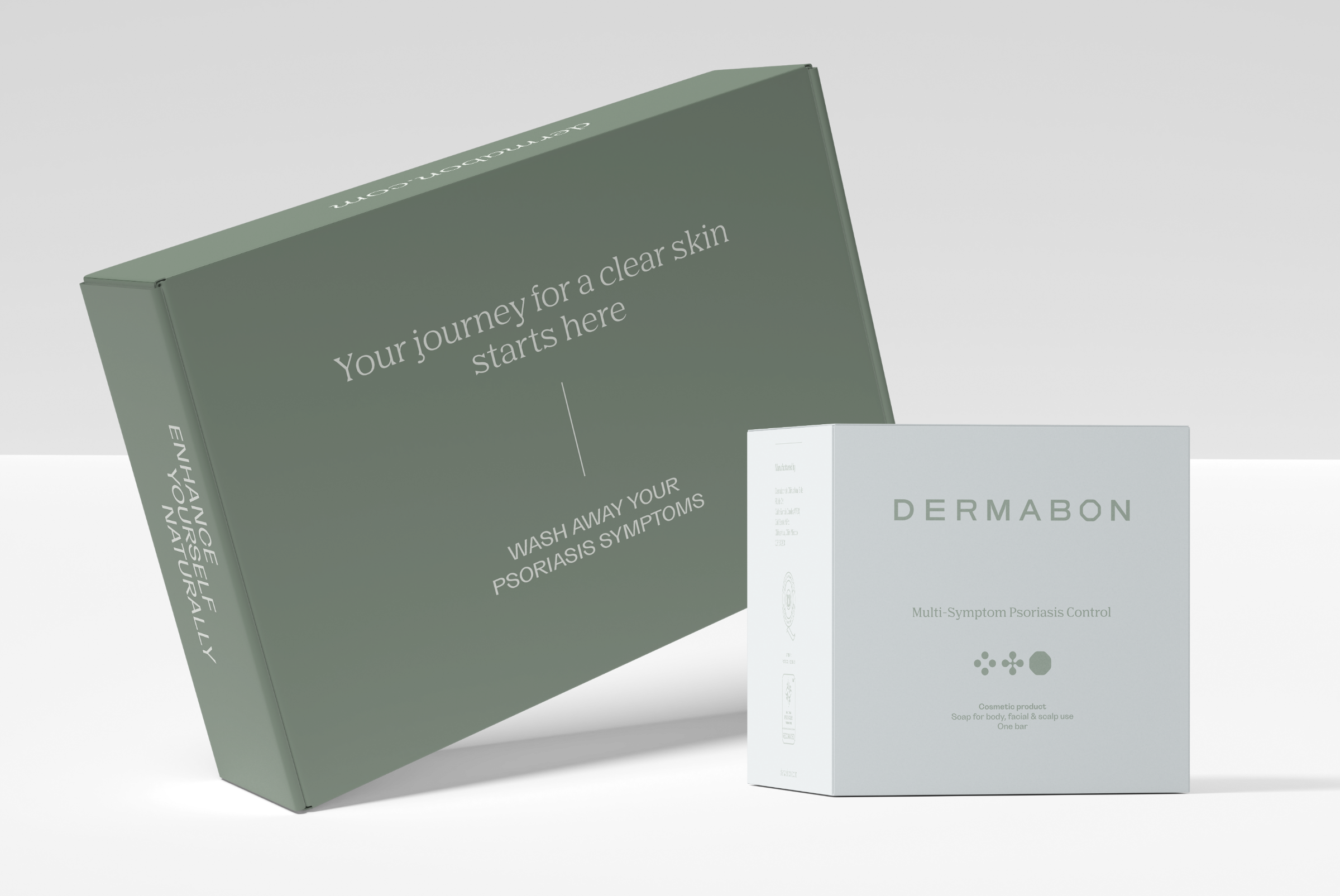
This is where Dermabon positions itself as the ideal alternative for a rebound-free treatment.
Dermabon uses Coal Tar (2%) as its active ingredient.
Why doesn’t Coal Tar cause rebound?
Unlike steroids, Coal Tar does not force your blood vessels to constrict artificially. Instead, it works by:
- Slowing down DNA synthesis: It tells the skin cells to stop multiplying so fast (antimitotic effect).
- Anti-inflammatory action: It reduces inflammation without causing addiction or tachyphylaxis.
Because it works on a cellular level rather than a vascular level, when you stop using Dermabon, your skin doesn’t “panic” or rebound.
The “Tapering” Strategy
If you have been using potent steroids for a long time, do not stop cold turkey (unless directed by a doctor), as this triggers the topical steroid rebound effect aggressively.
We suggest a transition or “tapering” method:
- Week 1: Use your steroid as prescribed, but introduce Dermabon in your daily shower.
- Week 2: Use the steroid only every other day. Use Dermabon daily.
- Week 3: Use the steroid every two days. Use Dermabon daily.
- Week 4: Stop the steroid. Continue with Dermabon for maintenance.
This allows your adrenal glands and blood vessels to adjust slowly while the Coal Tar takes over the job of controlling the plaques.
Dermabon: 0% Steroids guaranteed – We believe in healing the skin, not suppressing it.
Patience: The Key to Healing the Damaged Skin Barrier
Recovering from chronic steroid use is a marathon, not a sprint.
When you are in the process of quitting cortisone, your skin barrier is likely very thin (atrophic) and fragile.
Even with a rebound-free treatment like Dermabon, you may experience days where your skin feels dry or sensitive. This is normal. Your skin is relearning how to regulate itself without a chemical crutch.
- Hydrate: Use bland, non-irritating moisturizers immediately after your Dermabon shower.
- Avoid triggers: Stay away from harsh detergents and hot water.
- Trust the process: Skin cycles take about 28 days. Give your body time to regenerate healthy, steroid-free cells.
Frequently Asked Questions
How do I know if I am experiencing Tachyphylaxis?
If you have to apply your cortisone cream more frequently to get the same result, or if the cream that used to clear your skin in 2 days now takes a week and works barely, you are experiencing tachyphylaxis (tolerance).
Can I use Dermabon on my face if I have steroid withdrawal there?
Yes, but with extreme caution. The facial skin is very thin. Do a patch test behind your ear first. Avoid contact with eyes completely. If you have Red Skin Syndrome (RSS) on your face, consult your dermatologist before applying any new product.
Is the rebound effect permanent?
No, it is temporary, but it can last from weeks to months depending on how long you used steroids and their potency. The skin does heal eventually, but the withdrawal period can be intense without proper management.
Why didn’t my doctor warn me about this?
Many general practitioners view topical steroids as the “gold standard” and safe for short-term use. The problem arises when “use for 2 weeks” turns into months or years without proper follow-up. Pharmacists and specialists are becoming more aware of TSW, but education is still ongoing.
Conclusion
Information is your best defense. Now that you understand Tachyphylaxis and the topical steroid rebound effect, you can make informed decisions about your health.
You don’t have to be a slave to a tube of cream. There are effective, safe, and non-addictive ways to manage your skin condition. Dermabon is here to help you break the chains of the steroid cycle and find lasting relief.