Learn how others manage their Psoriasis.
Get tips for diet, exercise, and managing stress
Black Soap? The History and Science of Coal Tar
By Ana Cristina Vazquez Martinez
Feb/26/2026
Reading time: 7 minutes
Coal tar benefits
In an era of high-tech biologics, laser treatments, and synthetic creams with unpronounceable names, it seems counterintuitive to reach for a bar of soap that is jet black and smells distinctly like a paved road.
As a Medical Historian and Scientist, I am often asked: “Why, with all our modern technology, do we still use something so… primitive?”
The answer lies in a concept we call the “Gold Standard.” In medicine, new isn’t always better. Sometimes, nature gets it right on the first try. Coal tar is one of the oldest and most effective dermatological treatments in human history. It is a “living fossil” of medicine that has survived for a reason: it works.
While modern marketing pushes floral-scented, white lotions that vanish into the skin (and often vanish from your bank account with little result), the coal tar benefits remain the heavyweight champion of psoriasis and eczema relief. Today, we are going to look past the color and the scent to understand the fascinating science of this dark miracle.
An Accidental Discovery: From Industry to Medicine in the 19th Century
To understand what is coal tar, we have to travel back to the Industrial Revolution.
In the mid-1800s, the world was hungry for light. Cities were being illuminated by gas lamps. To produce this gas, coal was carbonized (heated in the absence of air). This process left behind a thick, dark, viscous byproduct.
At first, it was considered waste. But curious physicians of the era, noticing the antiseptic properties of similar substances like pine tar, began experimenting with it on patients suffering from chronic skin diseases. The results were undeniable.
By the late 19th century, “Liquor Carbonis Detergens” (an alcohol solution of coal tar) became a staple in every apothecary’s cabinet. It was the first true history of psoriasis treatment that offered more than just moisturizing; it actually reversed the plaques.
While other “miracle cures” of the 1800s—like mercury or arsenic—were eventually discarded because they were toxic or ineffective, coal tar remained. It survived the antibiotic era, the steroid era, and the biologic era. Why? Because its biological mechanism is so complex and multifaceted that even today, we are still discovering new ways it helps the skin.
How Does It Work? Slowing Down Mitosis (Skin Cell Growth Speed)
This is where the historian takes a step back, and the scientist steps forward. Why does a byproduct of coal clear up red, scaly patches?
Psoriasis is, fundamentally, a problem of speed.
In healthy skin, a cell is born in the basal layer and takes about 28 days to travel to the surface and shed off. This is a normal cell cycle.
In psoriatic skin, this process is hyper-accelerated. The cell cycle shrinks to just 3 to 5 days. The body produces skin cells faster than it can shed them. The result is a traffic jam of immature cells that pile up on the surface, creating those thick, silvery plaques.
The Mechanism of Action:
Coal tar is antimitotic.
In simple terms, it acts as a brake pedal for your DNA. It penetrates the cell wall and inhibits the synthesis of DNA in the skin’s basal layer. It tells the keratinocytes (skin cells) to stop dividing so frantically.
Furthermore, the coal tar benefits extend to inflammation. It is antipruritic (stops itching) and anti-inflammatory. It suppresses the specific immune response that drives the redness and swelling. Unlike steroids, which thin the skin over time, coal tar tends to normalize the skin structure, actually restoring the barrier rather than weakening it.
Why Does It Smell Like That? The Authenticity of an Ingredient Without Artificial Perfumes
Let’s address the elephant in the room: The smell.
Coal tar has a distinctive, pungent, earthy scent. Some compare it to bitumen or mothballs. For many, this is a barrier to use.
But let me reframe that for you.
In the world of natural psoriasis ingredients, scent is often a mask. Many commercial shampoos are loaded with synthetic fragrances (parfum) to make them smell like lavender or vanilla. For a sensitive, inflamed scalp, those fragrances are often irritants (contact allergens) that make the itching worse.
The smell of coal tar is the smell of potency.
It is the scent of thousands of organic compounds (hydrocarbons, phenols, cresols) working in synergy.
- It smells strong because it is strong.
- It is dark because it is rich in carbon.
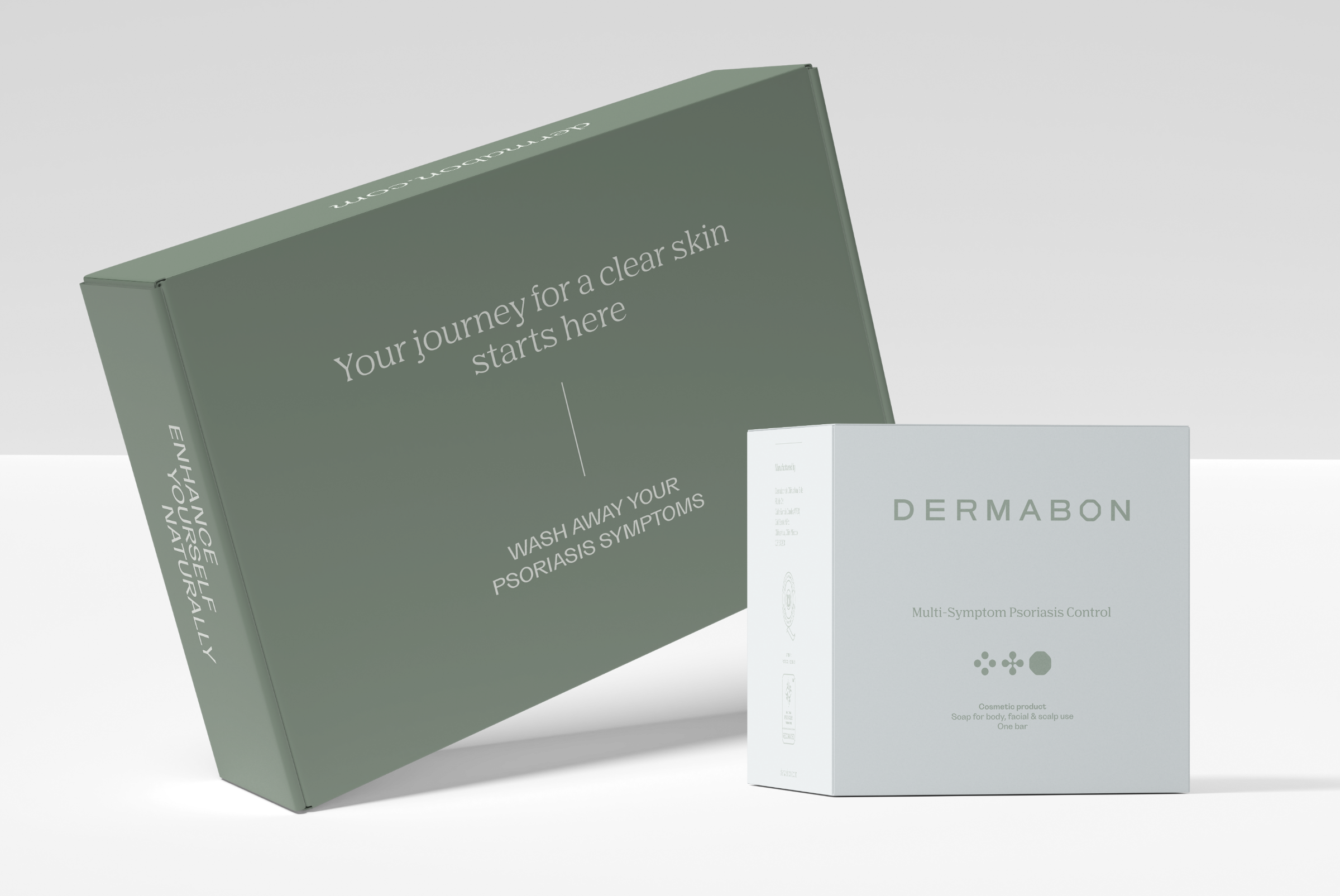
When you use a product like Dermabon, you are not applying a cosmetic designed to make you smell like a flower garden. You are applying a medical-grade tool. The scent is the assurance that we haven’t diluted the active ingredient to the point of uselessness just to please a marketing focus group. It smells like it works because it does.
FDA and NPF Recognition: It’s Not a Home Remedy, It’s Proven Medicine
There is a misconception that “natural” means “unregulated” or “folk medicine.” Coal tar breaks this rule.
It is one of the few natural psoriasis ingredients that is recognized as a drug.
The FDA coal tar monograph (21 CFR Part 358) lists coal tar as a Category I ingredient: Safe and Effective for the control of dandruff, seborrheic dermatitis, and psoriasis.
This isn’t just an old wives’ tale. It is backed by clinical data.
The National Psoriasis Foundation (NPF), the world’s leading authority on the disease, lists Coal Tar as a first-line therapy for mild to moderate psoriasis, especially for difficult areas like the scalp.
When you choose a coal tar treatment, you are choosing a therapy that has been vetted by the strict standards of modern pharmacology. It bridges the gap between nature and science. For a deeper dive into how we harness this power, you can read about the Science behind Dermabon and our unique manufacturing process.
The Dermabon Formula: Refining Tar for the 21st Century (Effective but Gentle)
So, if coal tar is so great, why did it fall out of favor for a while?
Because historically, it was messy. The old 19th-century ointments were greasy, stained clothes yellow, and were unpleasant to use.
This is where the science of Dermabon comes in.
We took the “Gold Standard” ingredient and modernized the delivery system.
Through a specialized saponification process, we integrated a 2% Coal Tar concentration into a solid bar format.
Why is this a breakthrough?
- No Stain: By bonding the tar into a soap base, it rinses away cleanly without staining your clothes or bedding.
- Hydration: We paired the strong antimitotic power of tar with moisturizing agents (like Vitamin E and oils) to prevent the dryness often associated with crude tar.
- Ease of Use: It fits into your daily shower routine. No sticky creams, no bandages.
We kept the coal tar benefits—the power, the efficacy, the history—and removed the inconvenience.
Frequently Asked Questions
Is Coal Tar safe to use long-term?
Yes. Unlike topical steroids, which can cause skin thinning (atrophy) and the rebound effect (TSW) if used for long periods, coal tar benefits can be sustained over months or years without the skin building a tolerance or suffering damage.
Will it stain my gray or blonde hair?
Crude coal tar can stain light hair, but modern formulations like Dermabon are designed to rinse out thoroughly. However, as a precaution for platinum blonde or white hair, we recommend rinsing very well and using a conditioner afterward.
Does it increase sun sensitivity?
Yes. Coal tar can make your skin more sensitive to sunlight (photosensitivity) for about 24 hours after use. It is part of how it works (similar to PUVA light therapy). We recommend applying sunscreen if you expose the treated areas to direct sunlight immediately after washing.
Why is it called “Black Soap”?
Quite literally due to its color. The raw material is dark, and because we do not bleach or dye our product to hide its nature, the bar retains the natural, deep color of the medicinal tar.
Conclusion
In a world that constantly chases the “next big thing,” there is comfort in knowing that some things have stood the test of time for 150 years.
Coal tar isn’t pretty. It isn’t pink. It doesn’t smell like a spa day.
But it is the Gold Standard because it respects the biology of your skin and effectively stops the chaos of psoriasis.
Don’t judge the soap by its color. Judge it by the clear skin it reveals underneath.