Learn how others manage their Psoriasis.
Get tips for diet, exercise, and managing stress
Severe Dandruff vs. Psoriasis: How to Know What’s Really on Your Head
By Ana Cristina Vazquez Martinez
Feb/19/2026
Reading time: 8 minutes
You are standing in front of the mirror, wearing a dark shirt, and you brush your shoulder for the tenth time this morning. You see those white specks falling like snow. You sigh, frustrated. You have tried every anti-dandruff shampoo at the supermarket—the blue one, the green one, the medicinal-smelling one—and nothing seems to stop the shedding.
As a Diagnostic Dermatologist, I often see patients who come in convinced they have “the world’s worst dandruff.” They feel embarrassed and unclean. However, upon closer inspection under the dermatoscope, I often have to tell them: “This isn’t just dandruff. This is an autoimmune condition called Psoriasis.”
Understanding the difference between dandruff and psoriasis is critical because the treatments are fundamentally different. Treating psoriasis with a simple anti-fungal dandruff shampoo is like trying to put out a forest fire with a water gun.
Today, I am going to guide you through a self-examination process. We will look at the texture, color, and location of your symptoms so you can finally understand what is happening on your head and find a real solution.
Is it Snow or Skin? Visual Differences Between Oily Flakes (Dandruff) and Dry Plaques (Psoriasis)
The first step in your skin diagnosis involves looking closely at what exactly is falling off your head.
Dandruff (Seborrheic Dermatitis):
Medically known as Seborrheic Dermatitis, common dandruff is essentially a reaction to a yeast (fungus) called Malassezia that lives on everyone’s scalp. This yeast feeds on the oils (sebum) your scalp produces.
- The Look: Think of “oily snow.” The flakes are usually small to medium-sized.
- The Texture: If you rub a flake between your fingers, it might feel slightly greasy or waxy. It tends to stick to the hair shaft before falling.
- The Sensation: It feels like your head is dirty or oily, even if you just washed it.
Scalp Psoriasis:
Psoriasis is not an infection or a hygiene issue; it is an immune system malfunction where skin cells grow too fast. Instead of shedding every 28 days, they pile up every 3 to 5 days.
- The Look: Think of a “dry shell.” Psoriasis doesn’t just flake; it builds up. You will see thick, raised patches of skin that look like stacked layers of mica or paper.
- The Texture: It is extremely dry, powdery, and rough. If you scratch it, it doesn’t just flake off; it crumbles like dry plaster.
- The Sensation: It feels tight, like you are wearing a helmet of dry skin that is too small for your head.
Color Matters: Red and Silver (Psoriasis) vs. Yellow and White (Seborrhea)
When analyzing seborrheic dermatitis vs psoriasis, color is your best clue. You need to look not just at the scale, but at the skin underneath.
The Palette of Dandruff (Seborrhea)
- Scale Color: White to Yellowish. Because it is mixed with oxidized scalp oil (sebum), dandruff often has a yellow tint.
- Skin Color: Light pink or slightly red. The inflammation is usually superficial. It looks like a mild rash.
The Palette of Psoriasis
- Scale Color: Silvery or Metallic White. We call these silver plaques on scalp. This specific sheen comes from air being trapped between the layers of rapidly accumulating skin cells.
- Skin Color: Deep Salmon Pink or Beefy Red. Underneath that silver scale, the inflammation is profound. The blood vessels are dilated and close to the surface.
- The Auspitz Sign: This is a key diagnostic test. If you peel off a psoriasis scale (which you shouldn’t do!), you will often see pinpoint bleeding spots. This rarely happens with regular dandruff.
Location: Is It All Over the Head or Behind Ears and Nape?
The geography of the lesion tells a story. While both conditions affect the scalp, they prefer different territories.
Where Dandruff Lives:
Seborrheic dermatitis loves oil. Therefore, it is usually diffuse. It covers the entire top of the scalp (the crown) where oil glands are most active. It often wanders onto the face, affecting the eyebrows, the sides of the nose, and even inside the ear canal. It generally lacks defined borders; it just fades into normal skin.
Where Psoriasis Lives:
Psoriasis is territorial. It forms clearly defined plaques with sharp borders—you can draw a line with a pen where the psoriasis stops and normal skin begins.
- The Hairline: It loves the “frontal band,” often extending an inch or so onto the forehead.
- The Occiput: This is the medical term for the back of the head, right above the neck. It is a classic hiding spot for silver plaques on scalp.
- Behind the Ears: If you have thick, cracking skin in the fold behind your ear, that is almost certainly psoriasis, not dandruff.
Both conditions cause an itchy scalp, but psoriasis itch is often described as a burning or biting sensation, whereas dandruff is a nagging, superficial itch.
Does Dermabon Work for Both? The Versatility of Coal Tar as a Keratolytic
Now that you are closer to a diagnosis, you are probably wondering: “Do I need two different treatments?” Not necessarily.
While the causes are different (fungus vs. immune system), the immediate solution for the symptoms overlaps in one powerful ingredient: Coal Tar.
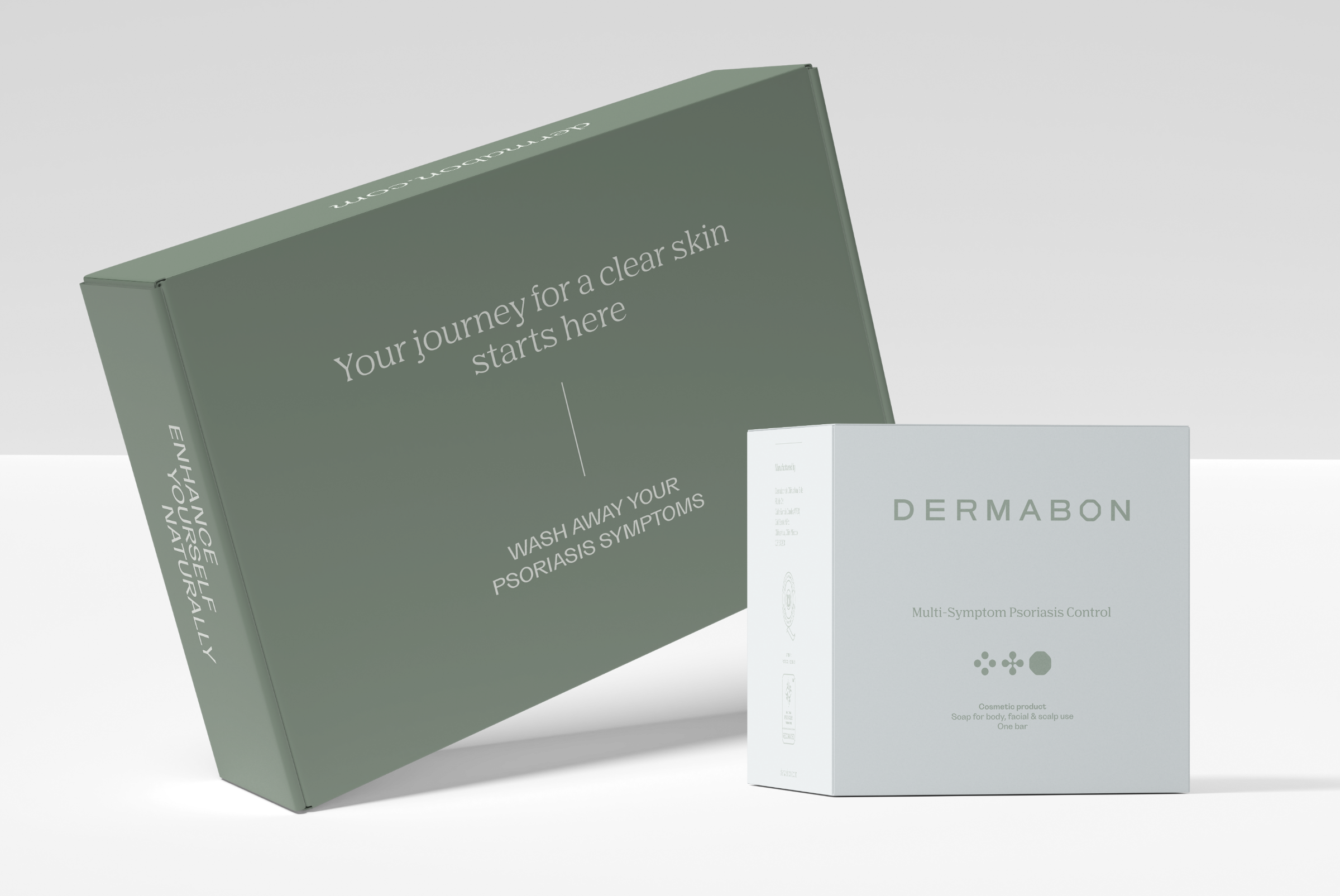
This is why Dermabon is such a versatile tool for skin diagnosis cases that fall in the gray area (or even if you have Sebopsoriasis, which is a mix of both).
How Coal Tar treats Dandruff (Seborrhea):
- Antiseptic & Antifungal: Coal tar creates an environment where the Malassezia yeast struggles to survive.
- Degreasing: It helps strip away excess sebum without drying out the hair shaft like harsh chemical detergents.
How Coal Tar treats Psoriasis:
- Antimitotic: This is the most important medical term you will learn today. It means it “stops rapid cell division.” It tells your DNA to slow down the production of skin cells, preventing the pile-up of plaque.
- Anti-inflammatory: It penetrates deep into the beefy red skin to calm the dilated capillaries.
- Keratolytic: It acts as a chemical exfoliant, softening the bond between the dead skin cells so the silvery scales can wash away gently without bleeding.
If you are suffering from thick crusts or unmanageable flakes, I recommend you try a Solution for severe scaling that addresses the root mechanism of the buildup.
When to Visit the Doctor for a Biopsy
Even with this guide, visual diagnosis has its limits. There are times when you must see a specialist to confirm the difference between dandruff and psoriasis through a scalp biopsy (a small punch of skin examined under a microscope).
Red Flags that require a Doctor:
- Joint Pain: If you have scalp issues AND your fingers or knees hurt or swell in the morning. This could be Psoriatic Arthritis.
- Hair Loss: While neither condition directly causes permanent baldness, the inflammation from severe psoriasis or aggressive scratching can cause Telogen Effluvium (temporary shedding).
- Body Spread: If you find similar plaques on your elbows, knees, or lower back.
- Resistance: If you have used therapeutic shampoos (like Coal Tar) diligently for 4 weeks with zero improvement.
For a visual reference of these conditions, you can consult the medical library at the Mayo Clinic, which offers excellent comparative images.
Frequently Asked Questions
Can I have both dandruff and psoriasis at the same time?
Yes. This condition is medically called Sebopsoriasis. It presents with the greasy yellow scales of dandruff but the redness and thickness of psoriasis. It is tricky to treat, but Coal Tar is the treatment of choice because it addresses both issues simultaneously.
Is scalp psoriasis contagious?
Absolutely not. You cannot catch psoriasis from someone else, nor can you give it to anyone. It is genetic and autoimmune. Dandruff (seborrhea) is also not contagious, as the yeast involved lives on everyone naturally; some people just react to it more.
Will psoriasis make my hair fall out?
Psoriasis itself does not kill the hair follicle. However, the thick plaques can trap hair, and the trauma from scratching or picking at the scales can pull hair out. Once the skin heals and the inflammation subsides, the hair usually grows back.
Can stress cause a flare-up of both conditions?
Yes. Stress is a major trigger for both seborrheic dermatitis vs psoriasis. Stress releases cortisol, which can increase oil production (feeding dandruff) and trigger the inflammatory response (worsening psoriasis). Managing stress is part of the cure.
Conclusion
Your scalp health is a window into your internal health. Whether it is the yeast-driven flakes of Seborrheic Dermatitis or the immune-driven plaques of Psoriasis, the result is the same: discomfort and insecurity.
But you don’t have to live with “snow” on your shoulders. Identifying the problem is the first step. The second is choosing a treatment that doesn’t just wash the hair, but treats the skin. Whether it’s the oily flake or the dry plaque, ingredients like Coal Tar in Dermabon offer a bridge back to a healthy, clear scalp.
Stop guessing and start healing.