Learn how others manage their Psoriasis.
Get tips for diet, exercise, and managing stress
More Than a Treatment: How Dermabon Helps You Regain Confidence and Security in Your Skin
By Ana Cristina Vazquez Martinez
Mar/26/2026
Reading time: 7 minutes
Psychological impact psoriasis
As a Psychodermatologist—a specialist who studies the intimate, undeniable connection between the mind and the skin—I see a side of psoriasis that most traditional doctors miss. When you step into my office, I don’t just look at the red, scaly plaques on your elbows or knees. I look at your posture. I look at the long sleeves you are wearing in the middle of July. I listen to the exhaustion in your voice.
Psoriasis is never just a physical condition. It is an emotional weight that you carry every single day.
I know about the uncomfortable stares you endure at the beach or the local swimming pool. I know the paralyzing social anxiety that grips you before a first date, wondering if they will notice the flakes on your shoulders. I know the silent heartbreak of checking a dark-colored chair after you stand up, terrified of what you might have left behind.
If you are feeling overwhelmed, isolated, or depressed, I need you to hear this first: Your feelings are completely valid. The psychological impact psoriasis confidence loss is real, heavily documented, and profoundly difficult to navigate.
But there is hope. Today, we are going to explore the powerful biological loop between your mind and your skin. More importantly, we are going to discuss how taking back control of your physical symptoms with a reliable Dermabon treatment can be the catalyst for profound emotional healing.
The Vicious Cycle: How Your Mind and Skin Communicate
To understand why psoriasis takes such a heavy toll on your mental health, we have to look beneath the surface. The skin and the central nervous system develop from the exact same cluster of cells (the ectoderm) when we are embryos in the womb. Throughout your life, they remain permanently wired together.
When you feel an emotion, your skin reacts. When your skin is in pain, your brain reacts.
Stress, Cortisol, and Inflammation
Let’s break down the vicious cycle that so many psoriasis patients fall into:
- The Trigger: You experience a stressful event (a tough day at work, a family argument, or even just the daily anxiety of living with a chronic illness).
- The Chemical Response: Your brain’s amygdala sounds the alarm, causing your adrenal glands to flood your body with cortisol, the primary stress hormone.
- The Physical Manifestation: High levels of cortisol cause massive systemic inflammation. In a psoriasis patient, this internal inflammation acts like fuel on a fire, triggering a hyperactive immune response that results in an angry, itchy, painful skin flare-up.
- The Psychological Crash: You look in the mirror, see the new plaques, and feel a deep sense of despair, frustration, and helplessness. This emotional crash triggers more stress, releasing more cortisol, which causes more inflammation.
You are trapped in a loop. Experts frequently discuss the profound emotional impact of skin diseases, noting that the visible nature of psoriasis often leads to clinical depression and severe social withdrawal. You cannot simply “think positive” to make the plaques go away, and you cannot easily cure the anxiety when your skin is physically burning.
So, how do we break the loop? We interrupt it from the outside in.
Breaking the Cycle: Physical Healing as Emotional Relief
Psychological healing often begins with a sense of agency—the feeling that you are in control of your own destiny. When you have spent years trying steroid creams that result in painful rebound flare-ups, you develop a sense of learned helplessness. You feel betrayed by your own body.
Regaining Control with Dermabon
Finding a treatment that actually works, consistently and safely, is a psychological game-changer.
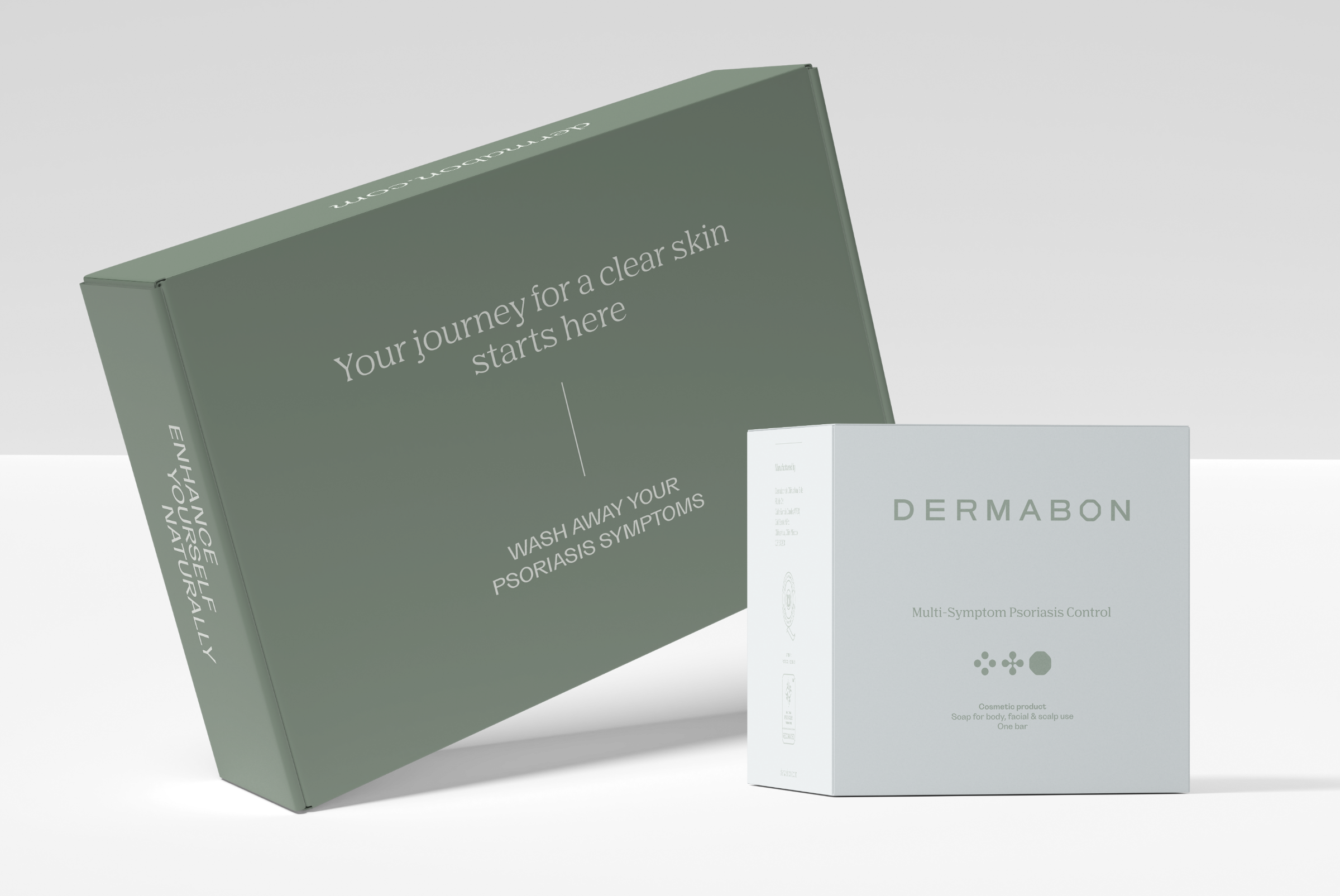
Dermabon breaks the inflammatory loop by physically halting the accelerated mitosis (the rapid overproduction of skin cells). By utilizing a precise, FDA-approved 0.9% concentration of coal tar, Dermabon gently dissolves the thick scales and soothes the inflamed nerve endings.
When the physical burning stops, your nervous system can finally relax. When you look in the mirror and see the redness fading into smooth, calm skin, your brain stops releasing cortisol. The anxiety begins to dissipate. You aren’t just healing your skin; you are rescuing your mental health. You regain your confidence, your security, and your freedom to live without constant hyper-vigilance.
Transforming the Shower into a Self-Love Ritual
Living with severe psoriasis often turns showering into an agonizing chore. The hot water stings, the harsh soaps burn, and seeing your naked skin in the harsh bathroom light can trigger a wave of depression.
With Dermabon, we can reframe this narrative. The application of Dermabon requires you to leave the thick, soothing lather on your skin for 3 to 5 minutes.
As a psychodermatologist, I urge my patients to use this mandatory dwell time not as a boring wait, but as a dedicated mindfulness ritual.
- As you massage the lather into your skin, do not do it with anger or frustration. Touch your skin gently, with compassion.
- During those 3 to 5 minutes, close your eyes. Focus on the sensation of the lukewarm water.
- Breathe deeply. Inhale for four seconds, hold for four, and exhale for four.
- Visualize the active ingredients dissolving the barriers, calming the inflammation, and restoring your body.
By turning your treatment routine into an act of self-love, you actively lower your heart rate, reduce your cortisol levels, and support the medication’s healing process.
Frequently Asked Questions
How can I quickly reduce stress and stop a flare-up when I feel overwhelmed?
When anxiety hits, your nervous system is in “fight or flight” mode. You need to anchor yourself in the present moment. Try the 5-4-3-2-1 Grounding Technique. Look around you and name out loud: 5 things you can see, 4 things you can physically touch, 3 things you can hear, 2 things you can smell, and 1 thing you can taste. This cognitive exercise forces your brain to step away from anxious, looping thoughts, immediately lowering cortisol spikes that aggravate your skin.
Is it normal to feel grieving or deeply depressed because of my psoriasis?
Absolutely yes. Grieving the loss of your “clear skin” and the carefree life you had before the diagnosis is a completely normal psychological response. Furthermore, chronic systemic inflammation literally alters brain chemistry, making psoriasis patients biologically more susceptible to depression. Please know that you are not vain for caring about your appearance, and you are not alone. If the psychological burden becomes too heavy, please seek the support of a therapist or a specialized psychodermatologist.
Conclusion
Living with a chronic, highly visible skin condition requires an immense amount of bravery. Every day that you get out of bed, face the world, and refuse to give up, you are showing incredible strength.
But I want you to remember this, even on your darkest, most painful days: Your skin does not define you. Your worth is not measured by the smoothness of your epidermis. You are defined by your resilience, your kindness, and the beautiful complexity of your mind.
Psoriasis is a part of your life, but it does not have to be the dictator of your happiness. By breaking the cycle of stress and addressing the physical symptoms with a reliable, safe treatment like Dermabon, you can reclaim your narrative. You can wear the clothes you want, swim in the ocean, and look in the mirror with a smile.